Clearing vs. Grubbing vs. Stripping: What Each Means on a Florida Site Prep Scope
Short answer
Clearing removes vegetation above ground: trees, brush and debris. Grubbing removes what's below: stumps, root mats and buried organic debris. Stripping removes the organic topsoil layer so structural fill or base can sit on suitable soil. A homesite or commercial pad usually needs all three under the building, road or utility footprint. Areas that only need to be opened up, such as buffers, future phases and lawn areas, may need clearing alone, which is often done by forestry mulching.
On this page
If you’re a builder, developer or owner pricing site work, you’ll see the words clearing, grubbing and stripping on plans, specs and bids. They’re separate operations with different equipment, debris volumes and costs. Mixing them up is one of the most common reasons two clearing quotes for the same lot look nothing alike.
The three operations
Clearing
Removing vegetation above ground: trees, brush, vines, palmetto, downed timber and surface debris. Clearing can be done by cutting and hauling, by chipping, or by forestry mulching, which grinds vegetation in place. After clearing alone, stumps and roots remain.
Grubbing
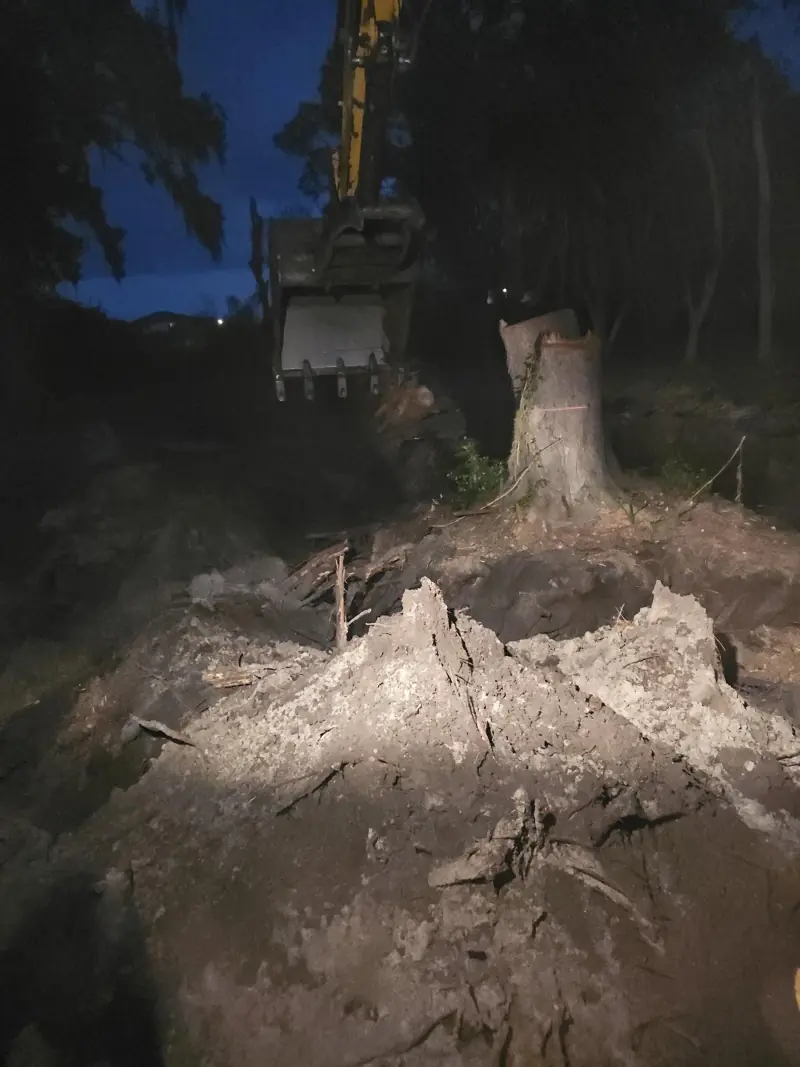
Removing what’s below ground: stumps, root mats, large roots and buried organic debris. It’s done with excavators, dozers with root rakes or similar equipment. Grubbing produces bulky debris that has to be hauled, ground or, where authorized, burned. It also leaves disturbed soil that has to be stabilized.
Stripping
Removing the organic topsoil layer: the dark, root-filled surface soil that compresses and decomposes over time. Engineers usually require stripping under structures, pavement and engineered fill so they sit on suitable soil. Stripped material is often stockpiled for reuse in landscape areas, if the plans allow it.
Side by side
| Clearing | Grubbing | Stripping | |
|---|---|---|---|
| Removes | Trees, brush, surface debris | Stumps, roots, buried organics | Organic topsoil layer |
| Typical equipment | Mulcher, feller, excavator, chipper | Excavator, dozer with root rake | Dozer, excavator, loader |
| Soil disturbance | Low (mulching) to moderate | High | High |
| Debris | Mulch on site, or logs/brush to haul | Stumps and root balls: bulky, dirty | Topsoil: stockpile or haul |
| Needed under buildings, roads, ponds | Yes | Yes | Usually, per geotech |
| Needed in lawn, buffer, future phase areas | Often | Usually not | Usually not |
| Utility locate (Sunshine 811) | Not for at-grade mulching | Yes | Yes |
| Stormwater/erosion controls | Required on permitted sites | Critical | Critical |
Where each one belongs on a typical project
A single-family homesite usually needs:
- Clearing of the building envelope, driveway, septic area and yard.
- Grubbing of the house pad, driveway and septic drainfield area.
- Stripping where the builder or engineer calls for it before fill.
- Mulching or selective clearing elsewhere to open views and yard without disturbing soil.
A commercial pad or subdivision usually needs:
- Clearing within the limits shown on the civil plans, with tree barricades respected.
- Grubbing and stripping under pads, parking, roads, ponds and utility corridors, to the depths in the geotechnical report.
- Mulching only, or no work at all, in buffers, preserve areas and future phases.
For the sequence on new home lots, see our new home construction clearing guide and site preparation.
Why this matters for your price
When two quotes differ wildly, check whether they cover the same operations:
- Is grubbing included, and where? “Clear the lot” might mean mulching only. A build-ready pad needs stumps out.
- Who handles debris? Mulching leaves material on site. Grubbing creates stumps and root balls that someone has to haul or grind.
- Is stripping included, and to what depth? It’s often a separate line item tied to the soil report.
- What about stockpiles? Is topsoil kept on site for reuse or hauled off?
- Erosion control. Silt fence, construction entrance and inlet protection: in or out of scope?
- Limits. Does the quote follow the clearing limits on the plans, or “the whole lot”?
Cost-saving pattern we use often: mulch everything inside the clearing limits first, then grub and strip only the structural footprint. Most of the vegetation becomes mulch instead of truckloads, and the ground outside the pad stays protected from erosion.
Permits and coordination
- Utility locates. Grubbing and stripping are excavation under Florida’s Chapter 556. Call Sunshine 811 at least 2 full business days before starting.
- Stormwater. Projects disturbing one acre or more, or part of a larger plan, need NPDES construction coverage and a SWPPP. See our stormwater guide.
- Trees and protected species. Tree permits, barricades and gopher tortoise clearance have to be in place before the machines start.
Getting an accurate quote
Send the civil plans or a sketch showing what’s being built, the clearing limits, the geotechnical stripping depth if you have it, and how you want debris handled. We’ll break the quote into clearing, grubbing, stripping and hauling lines so you can compare it with other bids. See commercial land clearing and site preparation.
Frequently asked questions
What is clearing and grubbing?
Clearing and grubbing is the standard site work item for removing vegetation and its roots. Clearing takes down trees, brush and debris above ground; grubbing removes stumps, roots and buried organic material so the ground can be graded and built on.
Is stump grinding the same as grubbing?
No. Stump grinding chips the stump down to a set depth below grade but leaves the root system in the ground. Grubbing pulls the stump and major roots out. Under structures, roads and utilities, plans typically call for grubbing rather than grinding.
Why do engineers require stripping?
Organic material compresses and decomposes, which can cause settlement under slabs, pavement and fill. Geotechnical reports often specify removing the organic layer to a certain depth so fill sits on suitable soil. The depth comes from the soil report for your site.
Can forestry mulching replace clearing and grubbing?
It can replace clearing in areas that aren't being built on. It doesn't replace grubbing or stripping under buildings, roads, ponds and utilities. On many projects, mulching the non-structural areas and grubbing only the footprint lowers disposal costs.
Who decides how deep to grub and strip?
The project's engineer and geotechnical report, plus the local building and site requirements. A clearing contractor works to those specifications.
Sources and official references
Rules change. Confirm requirements for your parcel with the agency before you clear. This article is general information, not legal advice.
Talk to us about site preparation
Send us the address and a few photos. We'll walk the property and give you a written scope and price.
Request a free estimate
Tell us where the property is, roughly how big it is and what you want done. We review every request before quoting, and a site visit is part of every written quote. Prefer to talk? Call (386) 675-7898 or text us photos.